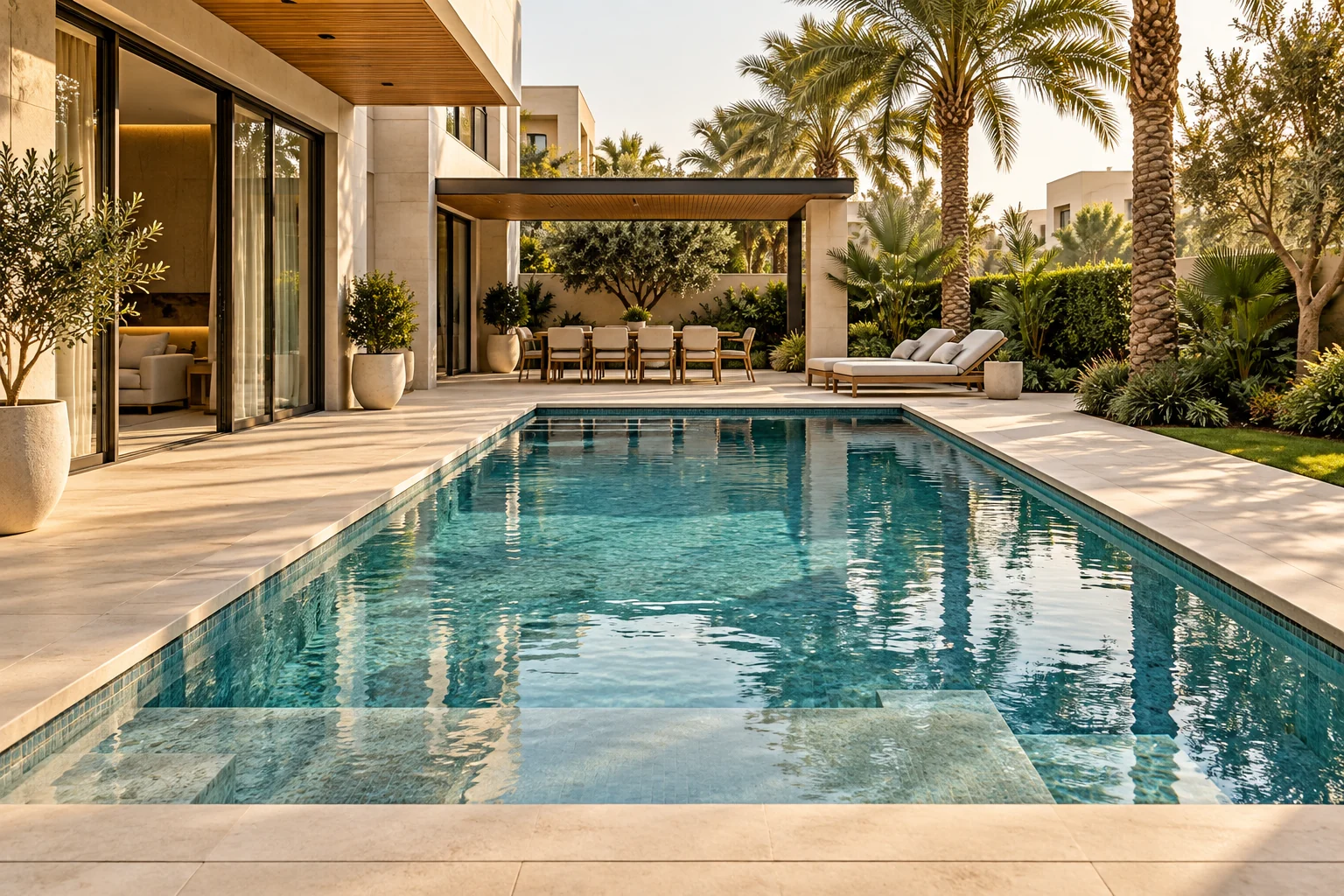
Compare decisions and exclusions as carefully as totals. The best-looking price may be attached to a different renovation.
Give every provider the same starting point
Share the same brief, photographs, existing records and description of problems. Identify the features you want to change and any elements you hope to keep. Ask each provider to state what it has inspected.
Use a common version of the layout or design brief. If an option changes during quotation, update the comparison rather than treating the revised proposal as directly equivalent.
Build a simple scope matrix
Use one row per meaningful part of the works. For each proposal, mark the item as included, excluded, provisional or requiring clarification.
- Condition assessment and any specialist investigations.
- Removal, preparation, waterproofing and finish system.
- Retained versus replaced shell, pipework and equipment.
- Lighting, temperature control and control functions.
- Coping, drainage, garden protection and reinstatement.
- Approvals, testing, documentation and warranties.
Compare the uncertain parts
Existing pools can contain conditions that have not yet been established. Ask how each provider has allowed for them and what happens after they become visible. An undefined allowance is not the same as a fixed scope.
For equipment, compare named systems and intended functions. For finishes, compare the complete installed system rather than only the tile or stone sample.
Read the programme and payment milestones
Establish which stages depend on design decisions, permissions, procurement or opening up. Compare the assumptions behind the dates as well as the dates themselves.
Ask who controls changes and how they are priced and recorded before work proceeds. Identify the construction counterparty and the contact responsible for each part of the project.
Choose a proposal you understand
Clarify the major gaps before negotiating a final figure. If a proposal is materially cheaper, ask the provider to explain what is different rather than assuming it represents the same work at a discount.
Keep the final scope, exclusions, agreed assumptions and handover requirements together. That record is more useful during the project than a comparison based only on the last number on a page.
Check the assumptions behind retained elements
Two renovation proposals may use the same word while retaining very different parts of the installation. Compare the shell, pipework, equipment, lights, coping and surrounding terrace separately. Ask what assessment supports each retention decision.
If a provider cannot confirm an element before opening up, request a clear allowance or decision point. That is more useful than treating uncertain work as either automatically included or automatically unnecessary.
Review the household impact
Discuss site access, working areas, protection, waste removal and the route through the property. Identify which garden areas can be used during the programme and who is responsible for making good the affected surfaces.
Record the proposed sequence and the decisions needed from you. A clear renovation quotation should help you understand both the finished pool and the work required to get there.
This is an editorial planning guide, not a property survey, approved design or installation specification. Project requirements are confirmed by the appointed specialists.
Let’s bring it back to your home.
Explore the complete service and share a first brief for your property.
Major pool renovations in Dubai