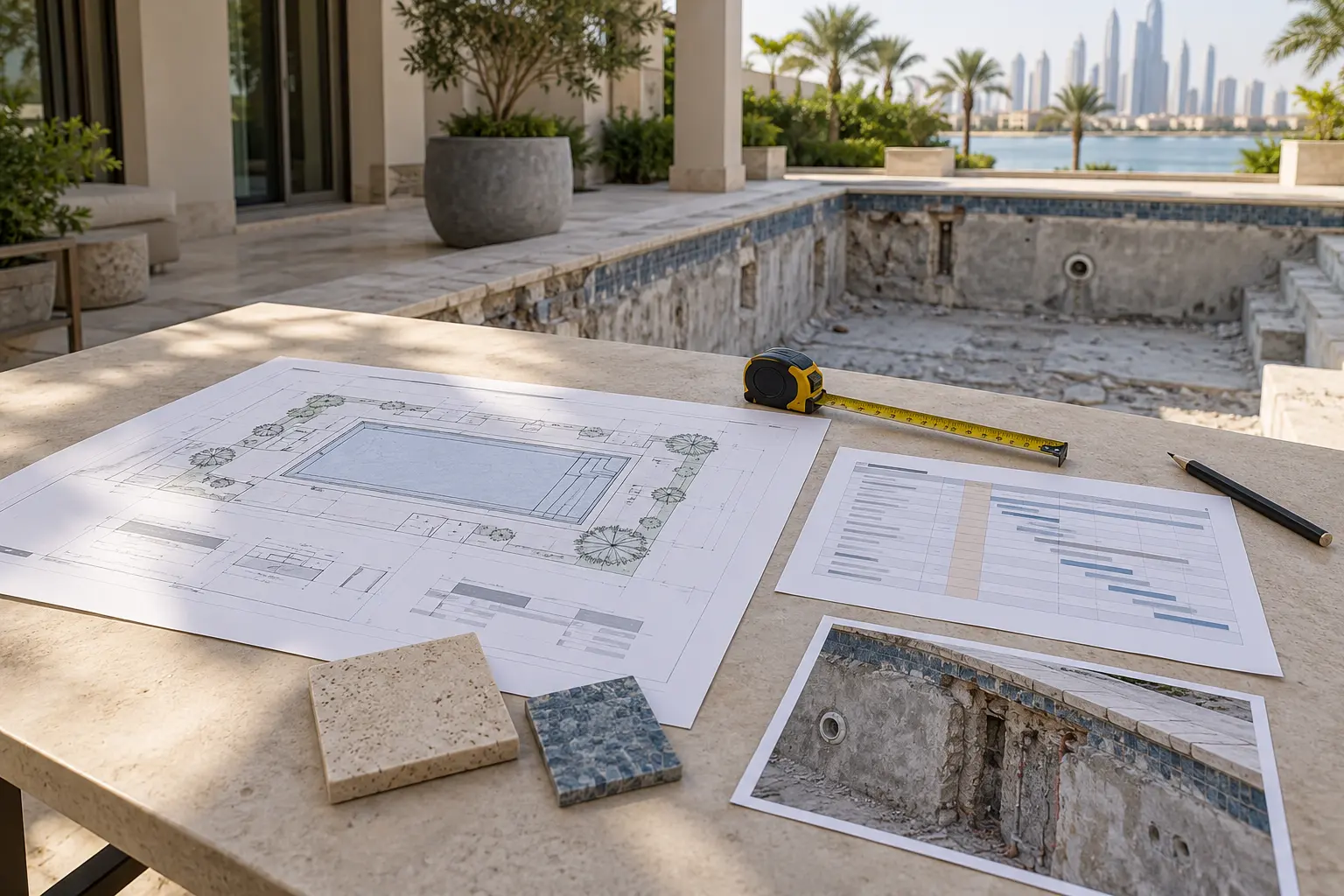
When opening up reveals something unexpected, pause the affected decision long enough to record the condition, the proposed response and its consequences. A useful renovation variation identifies what was found, why the base scope no longer fits, which options were considered, and who approved the resulting scope, price and programme change.
Treat opening up as a decision point
A renovation quotation is prepared from what can be inspected before work starts. Once finishes, fittings or surrounding construction are removed, the team may see conditions that were genuinely concealed. The discovery is not automatically evidence of poor pricing, and it is not automatically permission to proceed with extra work. It is a decision point that needs evidence and a defined response.
Separate the immediate site action from the commercial decision. The team may need to make an area safe, protect exposed work or prevent water ingress. That does not settle the permanent repair, its cost or its effect on other packages. Ask for those matters to be recorded before the affected area is closed or the original condition becomes difficult to verify.
Use one numbered record for every material change
Give each proposed change a stable reference such as VR-001. Put that number on the inspection photographs, revised sketch, supplier note, quotation and approval response. A messaging thread may help the team move quickly, but the final decision should sit in one retrievable record. This prevents a photograph in one chat, a price in another and an instruction in a phone call from becoming three conflicting versions of the same event.
The record should say whether the item is a concealed-condition response, an owner-requested upgrade, a design development or a correction to the agreed work. That description matters because different contracts allocate responsibility differently. It also keeps necessary remedial work separate from optional changes such as a new finish, altered step layout or additional feature.
Swipe or scroll horizontally to compare all columns.
| Record field | What it should answer | Useful evidence |
|---|---|---|
| Finding | What was observed, where and when? | Dated photographs, marked plan and inspection note |
| Reason | Why does the accepted scope no longer fit? | Original drawing, quotation assumption or condition record |
| Options | What responses were considered? | Short option note with inclusions and constraints |
| Impact | What changes in cost, time, access or other work? | Itemised proposal and revised sequence |
| Authority | Who may instruct and who has accepted? | Named approval in the agreed contract process |
Ask for facts before a solution
A useful finding note describes visible condition without jumping directly to a product or repair. It should locate the area on a plan, show scale in photographs, identify what was removed and state what remains unknown. If testing or specialist review is proposed, record who will arrange it and how the result will feed into the decision.
Avoid compressing diagnosis and sales into one sentence, such as saying that a newly exposed area is damaged and therefore a complete replacement is the only option. Ask what evidence supports the conclusion, which parts are confirmed and which are assumptions. A homeowner does not need to prescribe the technical repair; the appointed specialist should explain the basis clearly enough for the scope decision to be understood.
Compare options on the same basis
Some findings have one technically appropriate response. Others create a choice: local repair or broader renewal, retain a serviceable component or replace it while access is open, restore the existing detail or adopt a new design. Ask the responsible specialists to present the options against the same headings so a lower price is not simply an incomplete scope.
For each option, identify included removal, preparation, new work, testing and reinstatement. Note whether it changes warranties or creates a boundary between retained and new systems. Include any effect on finish selection, equipment access, terrace interfaces and future maintenance. The comparison should expose trade-offs rather than manufacture a false recommendation.
Record cost and programme together
A variation price without a time effect is incomplete. The proposal should state whether the change affects only the value, adds procurement time, changes the work sequence or moves the forecast completion date. If the answer depends on an order deadline, record the date by which the homeowner must decide and the assumption that applies after it.
RICS describes change control as processes that can alter project timescale, cost or scope, and distinguishes that process from the management needed to implement an accepted change. The homeowner version is straightforward: do not assess price in isolation. Ask what else moves, whether work is omitted as well as added, and how the revised total and current programme will be updated after approval.
Check design and approval consequences
A physical change can affect more than the pool contractor's drawing. It may touch structural details, drainage, equipment routes, terrace levels, community requirements or an authority submission. Ask the appointed consultant to identify whether a revised drawing, renewed approval or third-party no-objection is required for the actual property before the changed work proceeds.
Dubai Development Authority's building-modification design service, for projects within its remit, asks for approved and proposed drawings highlighting architectural, structural and mechanical changes. That is a useful reminder about traceable revisions, not a statement that every villa pool follows the same route. The relevant authority, developer and community requirements must be confirmed for the specific plot.
Keep the live renovation total visible
Maintain a simple register showing the original accepted value, every proposed change, approved additions, approved omissions and the current forecast total. Keep pending items separate from approved ones. If a provisional allowance is being replaced by a measured or quoted amount, show that movement clearly so the allowance is not accidentally counted twice.
The same register should show status: raised, information required, priced, awaiting decision, approved, rejected or completed. Add the date and the person or role responsible for the next action. This is not a substitute for the contract or professional cost report; it is a practical view that helps the homeowner see unresolved exposure before several decisions accumulate.
Use this variation review checklist
Before approving a material pool-renovation change, confirm that the record answers the following questions. If the team cannot answer one yet, mark it as pending rather than filling the gap with an assumption.
- Does the item have one reference number across photographs, drawings, prices and messages?
- Is the location and observed condition recorded before it is covered?
- Does the note distinguish confirmed facts from assumptions and further investigation?
- Is the revised scope described with removals, new work, testing, exclusions and reinstatement?
- Are necessary remedial work and optional owner upgrades priced separately?
- Does the proposal show both cost and programme consequences, including a decision deadline?
- Has the appointed consultant checked drawing, coordination and property-specific approval implications?
- Is the decision made by the person authorised under the agreed contract procedure?
- Have the current contract value, forecast completion and handover documents been updated?
Close each change into the final record
Approval is not the last step. When the changed work is complete, add the final drawing or marked-up detail, relevant product information, inspection record and any commissioning result to the project file. Confirm that superseded drawings are clearly identified so they are not used for later work. If the change affects care or warranty arrangements, update the handover schedule and responsible contact.
For a Veyrune pool-renovation discussion, share the available quotation, known repair history, photographs and the changes you want to make. The next useful step is to separate visible design goals from unknown existing conditions, then agree how findings will be recorded and approved before opening-up work begins.
Frequently asked questions
01Is every small site adjustment a formal pool-renovation variation?
Use the procedure defined by the signed contract. As a practical homeowner rule, record anything that changes agreed scope, price, completion assumptions, technical responsibility or the information used for approvals. Routine coordination that stays within the accepted scope may not need the same approval, but it should not be used to hide a material change.
02Should work stop whenever an unexpected condition is found?
The appointed professionals and contract procedure determine the safe response. The affected work may need to pause while the finding is inspected and an option is selected, even if unrelated work can continue. Ask for the immediate protection action, the decision deadline and any programme consequence to be recorded rather than relying on a verbal instruction.
03Can a photograph approve a variation?
A photograph is useful evidence of condition and location, but it rarely defines the complete revised scope. Link it to a numbered record that identifies the relevant drawing or quotation, proposed work, exclusions, price basis, programme effect and approval status. The signed contract determines who is authorised to instruct or accept the change.
Sources and further reading
RICS: Change Control and Management, 1st edition (amended February 2024) ↗Checked Tuesday, 6 October 2026Dubai Development Authority: Building Modification - Design requirements ↗Checked Tuesday, 6 October 2026Confirm current requirements for your property and selected equipment. Product examples do not imply a supplier relationship or local availability.
This is an editorial planning guide, not a property survey, approved design or installation specification. Project requirements are confirmed by the appointed specialists.
Let’s bring it back to your home.
Explore the complete service and share a first brief for your property.
Major pool renovations in Dubai