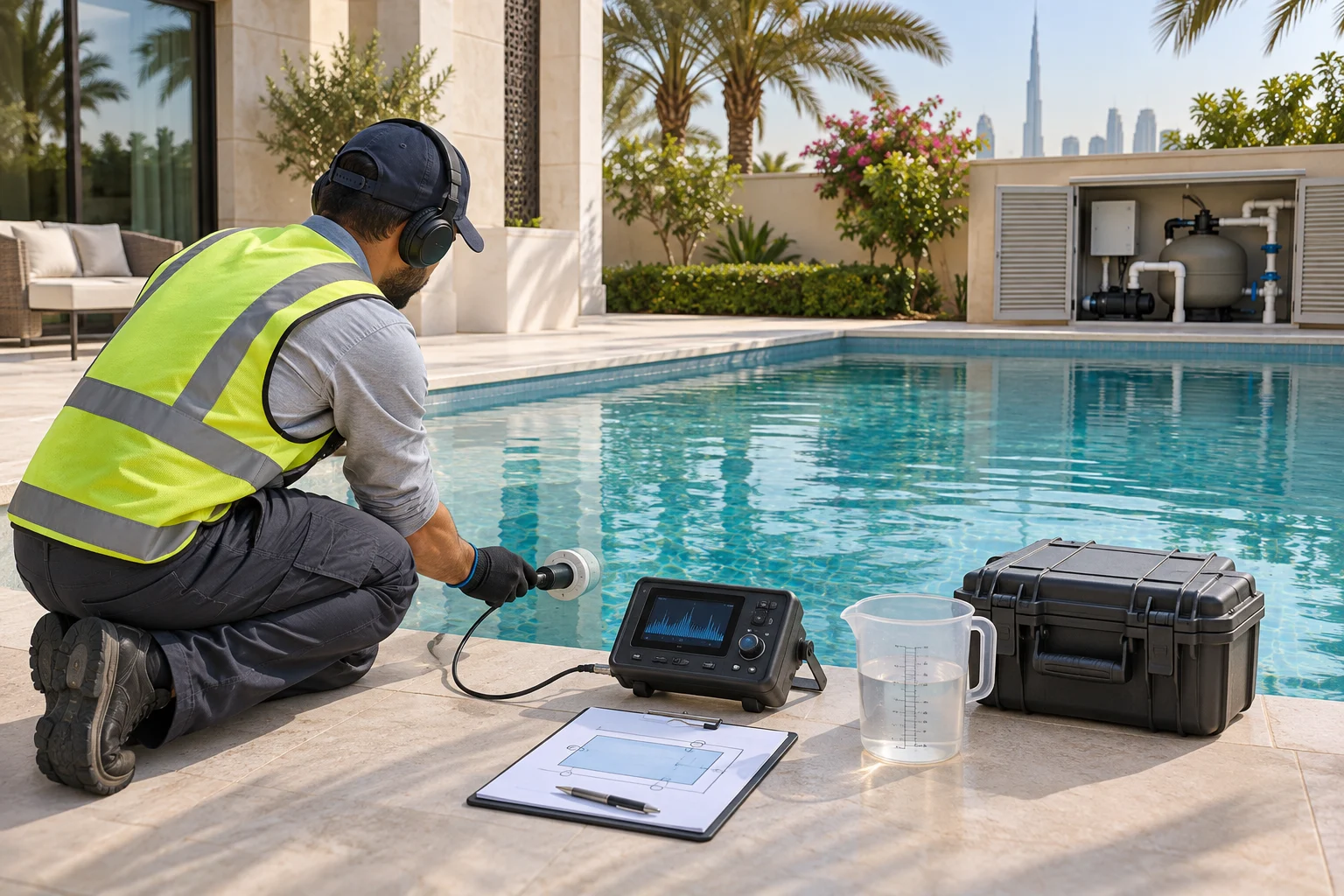
Treat unusual water loss as an observation, not a diagnosis. First record water level, operating state, weather, recent use, backwashing, overflow and automatic make-up behaviour. Then ask a qualified pool specialist to investigate in stages: visual and equipment checks, controlled operating comparisons, targeted isolation or pressure testing, appropriate detection methods and limited opening-up only where evidence points. The renovation scope should identify the confirmed defect, repair boundary, verification method and any uncertainty. Replacing finishes before the cause is established can conceal the evidence without solving the loss.
Separate the symptom from the cause
A lower water line is evidence that water has left the pool system, but it does not identify how. Normal evaporation and use vary with weather, water temperature, wind, shading, covers and bather activity. Water may also leave during filter backwashing, overflow events or maintenance. An automatic fill valve can hide the visible drop while increasing make-up water use.
Leak paths may occur at the equipment pad, valves, filter connections, pump seals, lights, skimmers, returns, drains, overflow channels, buried pipework, movement joints, penetrations, waterproofing or structural shell. The US EPA WaterSense pool guide lists several of these common locations and recommends checking automatic-fill behaviour. It is a useful observation framework, not a Dubai diagnostic threshold or substitute for a site-specific investigation.
Create a short evidence log before intrusive work
Record the water level at the same fixed reference point and similar time of day. Note whether circulation, heating, water features and automatic make-up were operating; whether the pool was used; and whether backwashing, cleaning, rainfall, irrigation or unusual wind occurred. Photograph damp areas, air bubbles, staining, cracking, settlement or equipment drips without assuming they share one cause.
Keep the record concise and safe. Do not enter plant areas you are not authorised to access, defeat automatic controls, block outlets or alter valves merely to create a test. Give the log to the appointed pool specialist, who can decide what controlled comparisons are appropriate. A consistent record improves the investigation even when it does not reveal the answer by itself.
Compare possible loss categories before selecting a repair
Use categories to prevent one visible symptom from dominating the scope. The purpose is not for the homeowner to diagnose the leak; it is to make sure a proposal explains which category was checked and what evidence supports the conclusion.
Swipe or scroll horizontally to compare all columns.
| Possible category | Useful evidence | Question for the investigator |
|---|---|---|
| Operational water loss | Use, overflow, backwash, cleaning and automatic-fill records | Has routine water movement been separated from unexplained loss? |
| Equipment pad | Dry inspection, drip or corrosion evidence and operating condition | Which components were checked under the relevant operating states? |
| Fittings and penetrations | Marked locations, visual observations and targeted detection results | Which skimmers, returns, lights, drains or joints remain suspect? |
| Buried pipework | Line identification, isolation evidence and specialist test results | Was the affected line narrowed before excavation was proposed? |
| Finish or shell | Crack map, joint condition, movement evidence and targeted testing | Is the visible defect a pathway, a symptom or unrelated? |
| Verification | Post-repair observation and agreed acceptance conditions | How will the team demonstrate that the identified loss was addressed? |
Investigate in stages
A staged investigation usually starts with documents, owner observations and a visual review of the pool, balance tank or overflow arrangement, plant and accessible connections. The specialist may compare relevant operating states, inspect fittings and identify which hydraulic circuits serve which outlets. Manufacturer guidance also supports checking equipment for leaks rather than assuming every loss comes from the shell.
If the source remains unclear, the appointed specialist can select controlled isolation, pressure testing, dye, acoustic, tracer or other suitable detection methods. These techniques require equipment, interpretation and property-specific safety controls. Do not attempt improvised pressure tests, plug outlets, enter confined plant spaces or add unapproved substances to the water. The report should explain why each stage is needed and what decision its result will enable.
Keep the system map attached to the findings
A useful investigation identifies the system being tested. Mark skimmers, drains, returns, vacuum points, lights, water features, overflow or balance-tank lines, make-up supply and accessible valves on a simple plan. Record which line was active or isolated during each test and where buried routes remain uncertain.
This map prevents a result on one circuit from being generalised to the entire pool. It also supports the later decision to retain or replace existing pipework. If drawings are missing, label inferred routes as unverified. Controlled opening-up may be appropriate where evidence converges, but the proposal should show the smallest sensible investigation area and the reinstatement responsibility.
Do not let new finishes outrun the diagnosis
A renovation may include tile, plaster, waterproofing, coping, lights and fittings, yet a finish package alone does not resolve an unverified leak. Cracked grout or a loose tile can be visible while the actual pathway sits at a penetration or pipe connection. Conversely, a damp plant fitting may be separate from a structural movement issue. Treat each conclusion according to its evidence.
Before finishes are removed, record crack locations, joints, hollow areas, penetrations and recurring stains. Coordinate any sample removal or opening-up with the renovation investigation plan. Our opening-up guide explains how to define hold points, evidence records and reinstatement. This creates a defensible repair boundary instead of turning widespread demolition into the diagnostic method.
Define repair verification before work starts
The proposal should say how the identified repair will be checked. Depending on the defect and responsible specialist, verification may include inspection before concealment, documented line testing, equipment operation, curing or fill stages, water-level observation and photographic records. Conditions such as weather, automatic fill and backwashing should be noted so the post-repair comparison is meaningful.
Do not promise zero water-level change or import a foreign rule as a universal Dubai acceptance value. Agree a project-specific verification method with the qualified parties and selected materials or equipment manufacturers. If uncertainty remains after a repair, record it transparently and define the next diagnostic stage rather than declaring success from a short visual check.
Use this water-loss investigation checklist
Use the checklist to brief specialists and compare proposals. It is an evidence and responsibility list, not a do-it-yourself test sequence.
- Record the fixed water-level reference and observation dates
- Note circulation, heating, features and automatic-fill status
- Log use, backwashing, cleaning, rainfall and unusual conditions
- Photograph visible dampness, cracks, settlement and equipment drips
- Collect drawings, renovation history and previous test records
- Map accessible fittings, hydraulic circuits and plant components
- Ask which operating states and components were visually checked
- Require specialists to define any isolation or pressure-testing scope
- Keep dye, acoustic, tracer and other detection methods with qualified parties
- Mark confirmed, suspected and unverified findings separately
- Define controlled opening-up and reinstatement responsibilities
- Preserve evidence before finishes or fittings are removed
- State the proposed repair boundary and material-system assumptions
- Agree inspection and verification before concealment or refill
- Record limitations and the next step if the result is inconclusive
Turn the findings into a comparable renovation scope
Ask every bidder to price from the same investigation record. The scope should distinguish confirmed repairs, provisional investigation items, finish renewal and optional improvements. It should name the responsible testing party, deliverables, access assumptions, exclusions, hold points, verification and reinstatement. A cheaper proposal is not comparable if it silently assumes that every leak will disappear with new tile.
For a Veyrune pool-renovation planning conversation, bring the evidence log, pool and plant photographs, available drawings, maintenance records and any previous test report. The next useful step is a coordinated site review that identifies what can be verified non-invasively, what requires specialist testing and which decisions should remain on hold until the cause is better supported.
Frequently asked questions
01Does a falling pool level prove that the shell is leaking?
No. Water can leave through evaporation, splash, overflow, backwashing, equipment leaks, fittings, pipework or the pool structure. An automatic fill device can also mask the pattern by replacing water. Record the conditions and have the system investigated in stages before choosing a repair. A generic evaporation comparison is an observation aid, not proof of a particular defect.
02Should a suspected leaking pool be drained immediately?
Do not drain it as a default response. Draining can remove useful evidence and may introduce property-specific structural, groundwater, finish or safety risks. The appointed pool and engineering specialists should decide whether partial or full draining is needed, define the safe method and permissions, and record what must be inspected while the pool is accessible.
03What should a pool leak investigation report include?
It should state the observed loss and test conditions, equipment and operating state, inspected areas, methods used, findings, limitations, confirmed or suspected defect locations, recommended opening-up, proposed repair boundary and verification plan. Photographs, readings and marked drawings make competing renovation proposals easier to compare and help separate evidence from assumptions.
Sources and further reading
Dubai Municipality: Technical Guidelines for Approval of Swimming Pool Plans ↗Checked Wednesday, 11 November 2026US EPA WaterSense: Jump Into Pool Water Efficiency ↗Checked Wednesday, 11 November 2026US EPA WaterSense: Pool Water Efficiency ↗Checked Wednesday, 11 November 2026Pool & Hot Tub Alliance: Remodeling and Repairs ↗Checked Wednesday, 11 November 2026Pentair: Opening Your Pool ↗Checked Wednesday, 11 November 2026Confirm current requirements for your property and selected equipment. Product examples do not imply a supplier relationship or local availability.
This is an editorial planning guide, not a property survey, approved design or installation specification. Project requirements are confirmed by the appointed specialists.
Let’s bring it back to your home.
Explore the complete service and share a first brief for your property.
Major pool renovations in Dubai